
Tanzania's Ultimate Guide to the Great Wildebeest Migration
Spectating of the Perfect Movement in Africa.
The Great Wildebeest Migration is often described as a “once-in-a-lifetime safari,” but that phrase doesn’t fully explain what’s really happening on the ground. This is not a single event or a short seasonal spectacle, it’s a continuous year-round movement shaped by rainfall, grass quality and survival instincts.
Across the plains of the Serengeti National Park and into Kenya’s Maasai Mara National Reserve, over 1.5 million wildebeest, joined by hundreds of thousands of zebras and gazelles, move in a looping pattern. They are not migrating with a fixed destination in mind. Instead, they are constantly responding to the environment searching for fresh grazing and water.
What makes this movement so fascinating is its unpredictability. The timing shifts slightly each year. River crossings don’t follow a strict schedule. Some days feel quiet, while others unfold with sudden intensity. Understanding this migration is less about ticking off a checklist and more about learning how nature organises itself without maps, without borders and without pause.
If you approach it with patience and curiosity, the migration becomes more than a safari highlight. It becomes a story you follow, piece by piece.
What is the Great Wildebeest Migration?
The Great Wildebeest Migration is not a single event or a one-time crossing. It is a continuous, year-round movement of animals across the ecosystem shared by Serengeti National Park in Tanzania and the Maasai Mara National Reserve in Kenya.
At the center of it are over a million wildebeest, joined by hundreds of thousands of zebras and gazelles. Together, they move in a wide circular route, guided by rainfall and the search for fresh grass. There is no map, no fixed schedule and no clear starting point. The movement is driven by instinct; the need to eat, to survive and to keep going.
What makes the migration special is not just its size, but how it unfolds over time. One month, the herds are spreading across the southern plains giving birth. A few months later, they are pushing through river crossings filled with danger. Then they move again, returning south as the seasons change. It is a cycle that repeats every year, yet never looks exactly the same twice.
This is not a staged experience. You are not watching a show that begins at a set time. Some days are quiet with herds grazing peacefully while other days bring sudden movement; a rush toward a river, a predator sighting or a shift in direction that changes everything. That unpredictability is part of what keeps the experience real.
For many travelers, the migration becomes more than just a highlight of a safari. It becomes a story they carry with them, not because of one scene but because of everything that happens in between.
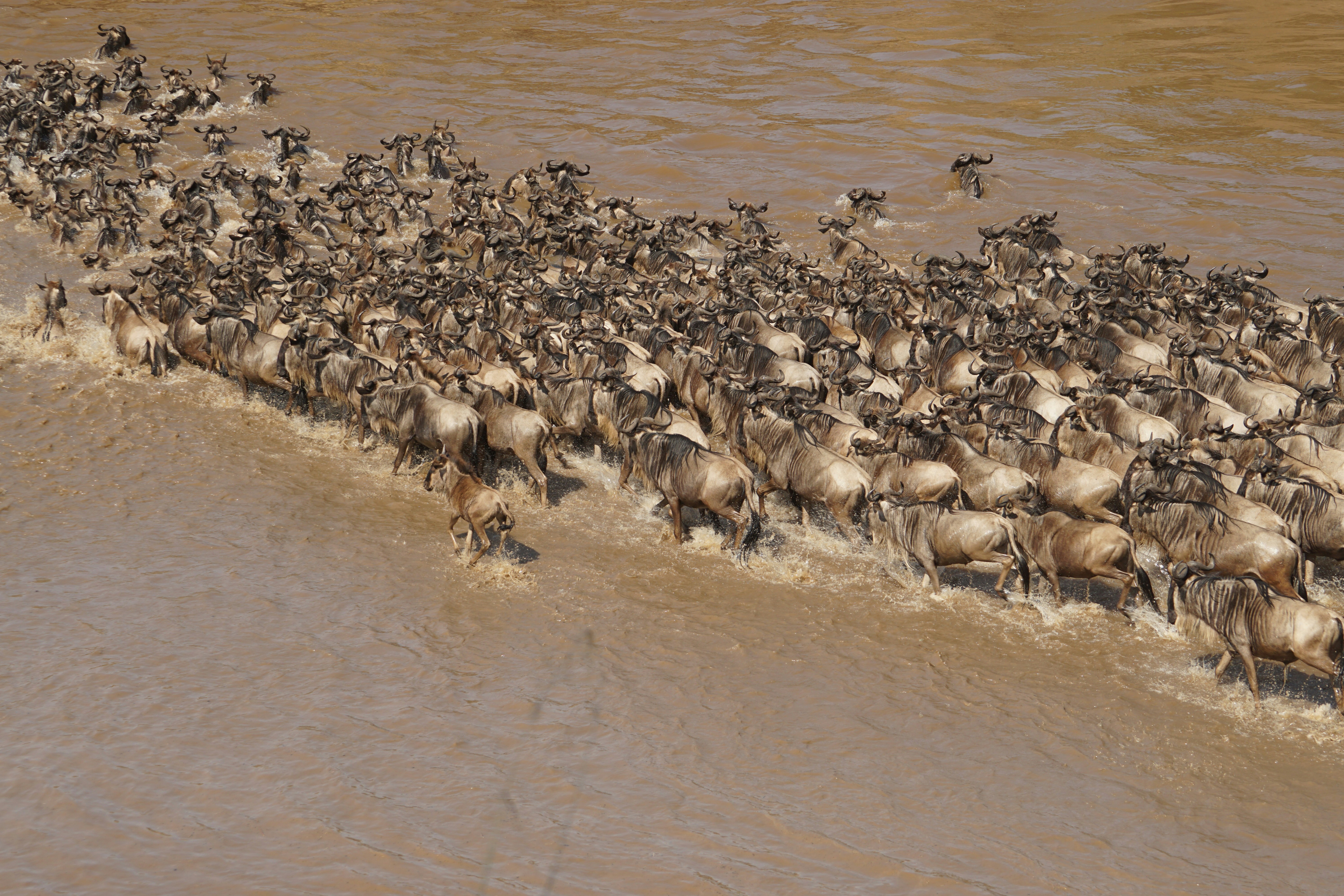
When to Experience the Migration (Month-by-Month Insight)
Timing your safari depends on what you want to witness. Each phase of the migration offers a different perspective.
I. January to March – Calving Season (Southern Serengeti)
The journey often begins in the open grasslands of the Southern Serengeti and Ndutu area, where thousands of wildebeest gather to give birth between January and March. This is one of the most meaningful moments in the migration cycle. The plains are rich with fresh grass after the short rains, and the herds settle here not only because of food, but because it gives the newborn calves a better chance in life.
During this season, the landscape feels alive in a different way. Calves are born almost every minute, and within a very short time, many are already trying to stand and walk beside their mothers. It is a time of life, but also one of constant danger. Lions, cheetahs, hyenas, and other predators stay close, waiting for the weakest moments. That tension is part of what makes this season so unforgettable.
For visitors, this is one of the best times to experience the migration in a slower and more intimate way. The herds are spread across the plains, the skies are wide, and game viewing can feel deeply personal. It is a remarkable season for photography, family safaris, and travelers who want to feel the pulse of the Serengeti without the rush of the river crossings.
II. April to May – The Long Rains and Movement Begins
As the long rains settle over the Serengeti, the migration begins to shift. The herds slowly leave the southern plains and start moving north and west in search of fresh grazing. This is not a sudden event. It is more like a steady pull, guided by the weather, the grass, and the instinct that has shaped this movement for generations.
April and May are often quieter months in the parks, but they are important months in the migration story. The rain transforms the land, turning dusty plains into green feeding grounds. The herds begin to move in large, loose groups, sometimes stretching for miles. The mood changes too. Calving season gives way to travel. Mothers stay close to their young, and the whole journey becomes a careful balance between feeding, resting, and moving on.
It is a good time for those who enjoy a slower safari pace and want to see the migration in motion rather than waiting for dramatic crossings. The story here is not about one big moment, but about the journey itself.
III. June to July – Grumeti River Crossings
By June and July, the migration reaches the western corridor of the Serengeti, where the first serious river crossings begin. The Grumeti River becomes one of the major challenges for the herds. The wildebeest gather at the riverbanks, sensing the danger ahead. Crocodiles wait beneath the water, and the tension in the air is almost visible before the first animal jumps in.
This part of the migration is often unpredictable. A crossing may happen quickly, or the herds may wait for hours, even days, before moving. That uncertainty is part of the experience. When the crossing finally begins, everything happens fast.
It is ideal for travelers who want something a little less crowded but still powerful and dramatic. The western Serengeti also has excellent wildlife beyond the migration, including elephants, lions, leopards, and large herds of resident game. So even when the herds are waiting for the river, the safari never feels empty.
IV. August to October – Mara River Crossings
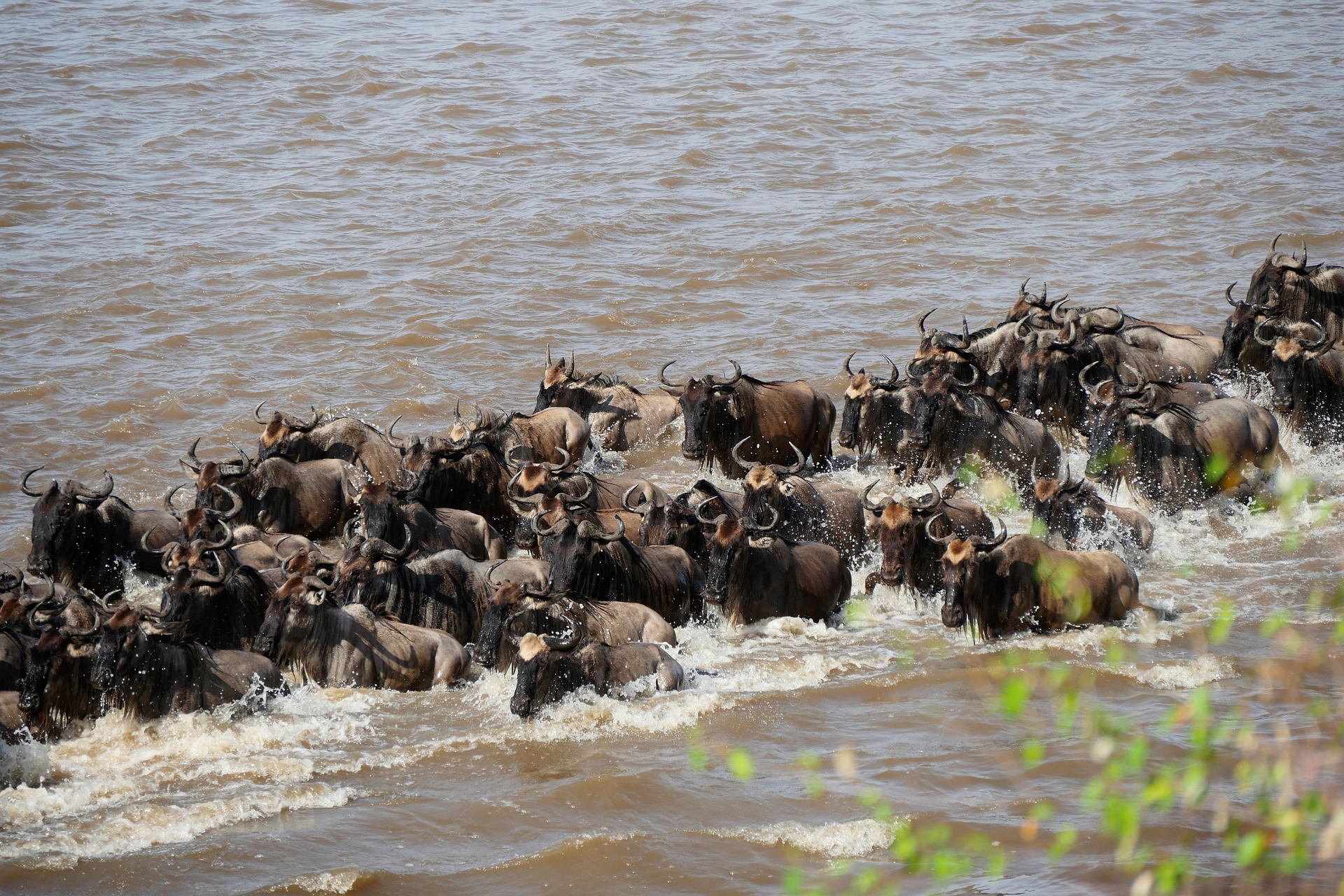
This is the most famous chapter of the migration. From August through October, the herds move into the northern Serengeti and face the Mara River, one of the biggest obstacles in their path. This is the part many travelers dream about because it carries so much tension, movement, and emotion. The herds gather on the banks, often hesitating for long periods before making the leap.
The crossing itself is rarely neat or predictable. The wildebeest do not move in a straight line with perfect timing. They press forward in waves, stop, turn back, gather again, and then suddenly explode into action. Once the first animals enter the river, the rest usually follow. Crocodiles lie in wait, the current can be strong, and panic often spreads through the herd. Yet the wildebeest keep going, driven by instinct and the need to survive.
For safari guests, this is one of the most memorable wildlife experiences on earth. This period is so popular, planning ahead matters a great deal. The best viewing spots and camps often book early, especially for travelers hoping to be close to the river action.
November to December – The Return South
As the short rains begin in November and December, the migration turns back toward the south. The herds leave the northern plains and make their way toward the fresh grasslands of the Serengeti and Ndutu region once again. It is a full circle, but not a simple one. Along the way, the animals continue to feed, move, and respond to the changing land around them.
This part of the migration is sometimes overlooked, but it is just as important as the more famous crossing season. The return south brings new energy to the plains. The grass starts to recover, the landscape greens up again, and the herds begin preparing for the next calving season. There is a sense of renewal in the air.
During this time, the parks are often less crowded than the peak crossing months, and the wildlife viewing remains strong. This is a great season for travelers who want both movement and comfort, especially those who prefer a quieter safari atmosphere while still following the migration cycle closely.
Best camps to stay close and Witness the Migration
Choosing the right camp can shape the whole migration experience. Some camps put you closer to the calving grounds, others keep you near the river crossing routes, and some are perfect for travelers who want a comfortable base while still staying close to the action. For the Great Wildebeest Migration, location matters just as much as comfort.
To mention but few, the camps below are a strong fit for travelers who want to follow the movement of the herds without losing the feeling of being close to nature:
I. Angata Migration Camp
Angata Migration Camp is a great choice for travelers who want to stay connected to the migration rather than simply watch it from far away. Its biggest strength is that it follows the movement of the herds, which means guests have a better chance of being near the action during the most important months of the year.
This camp suits travelers who enjoy a safari experience that feels close, practical, and well timed. It is the kind of place that allows you to wake up early, step out into the bush atmosphere, and begin the day already near wildlife activity. For guests who want the migration to feel part of their daily rhythm rather than a distant event, this camp is a very solid option.
II. Angata Serengeti Central
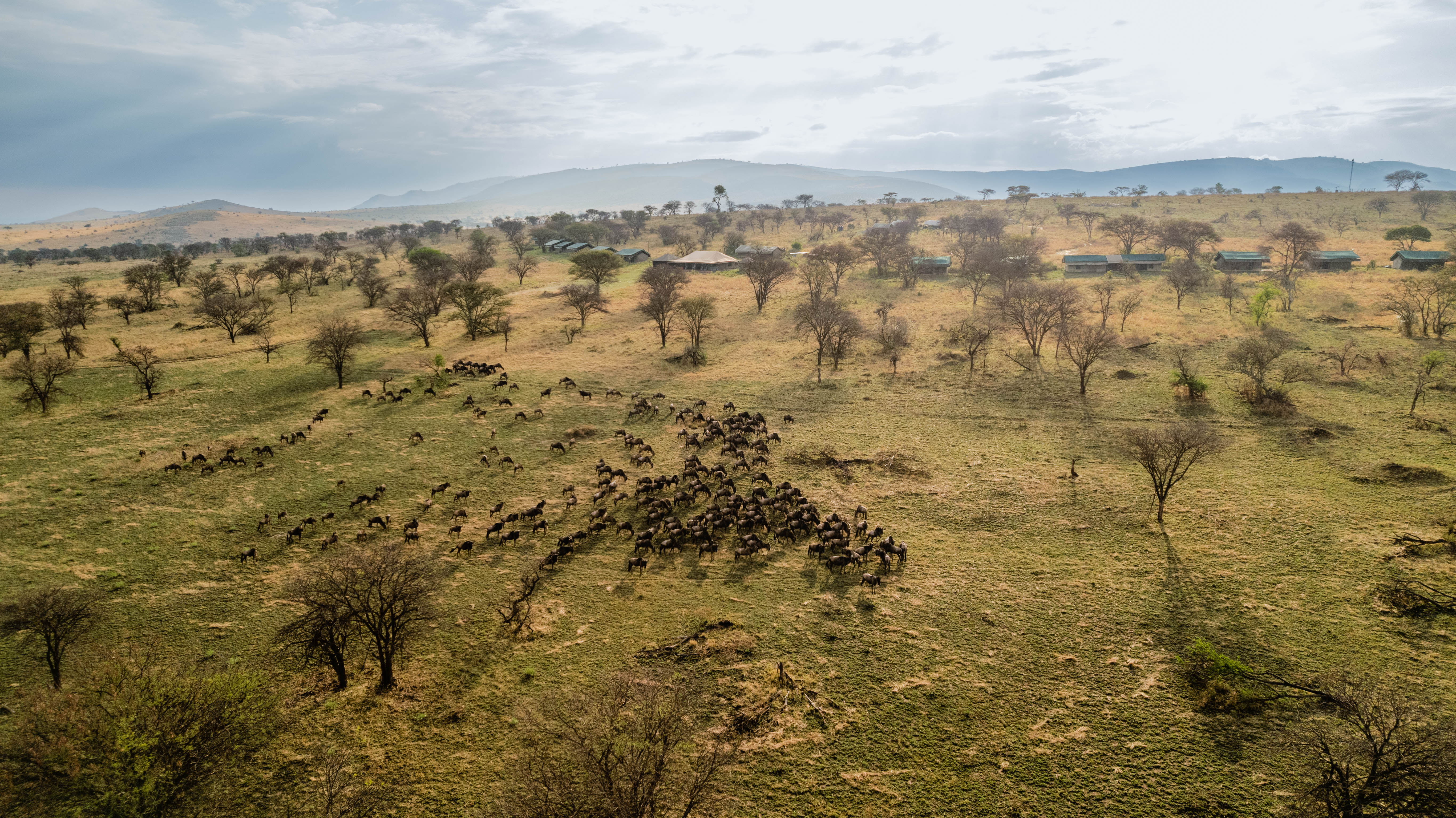
Angata Serengeti Central is a good fit for travelers who want balance. It offers a central location that works well for following different parts of the migration as it moves through the Serengeti. Because it sits in a more active part of the park, it gives guests a fair chance of seeing both resident wildlife and migrating herds, depending on the season.
This camp is especially useful for travelers who do not want to keep changing lodges too often. It gives a sense of stability while still keeping you within reach of major wildlife areas. For families, first-time safari guests, or anyone who prefers a calmer base with good access to game drives, it is an easy camp to recommend.
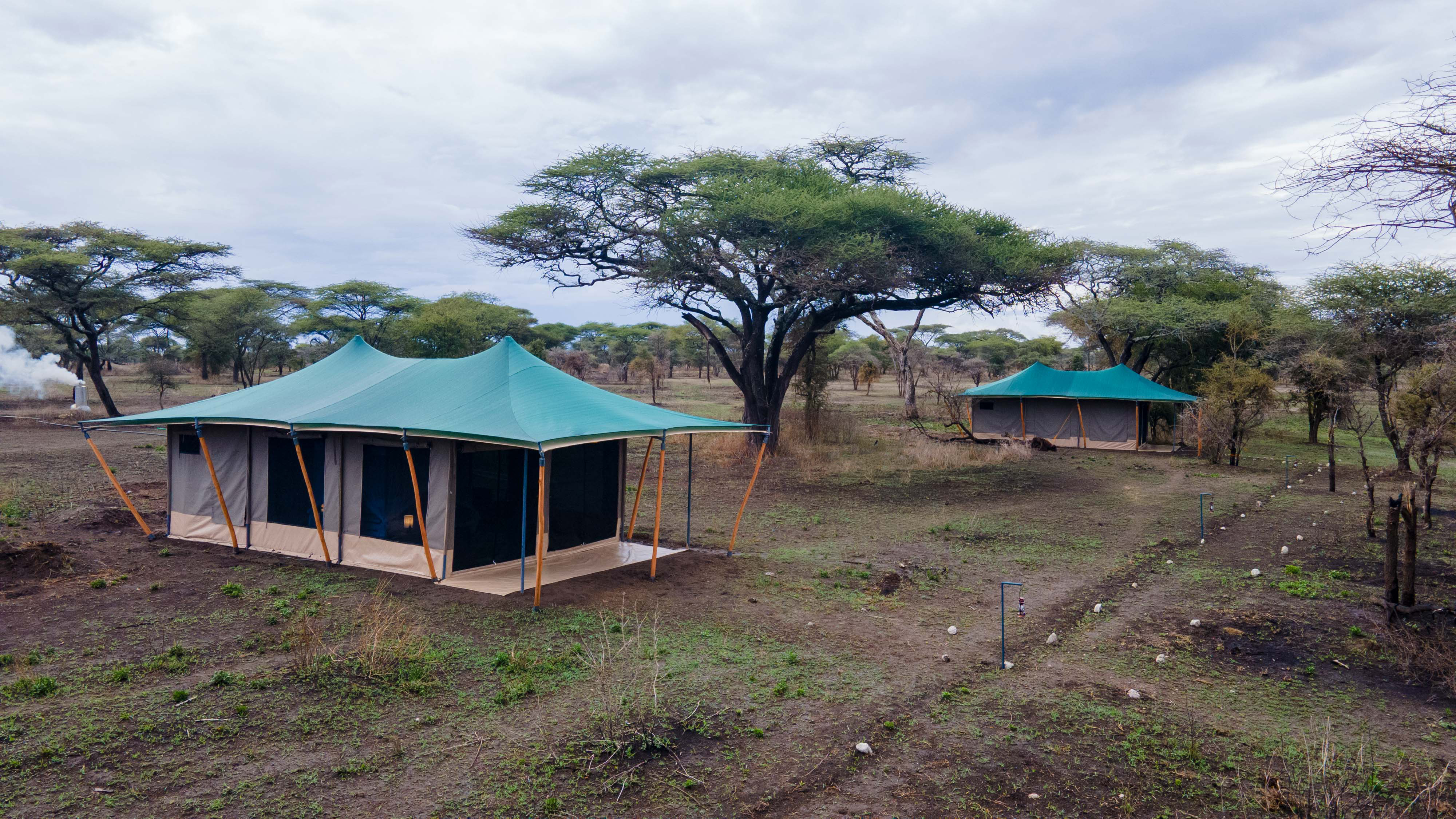
III. Serengeti Classic View Migration Camp – Ndutu
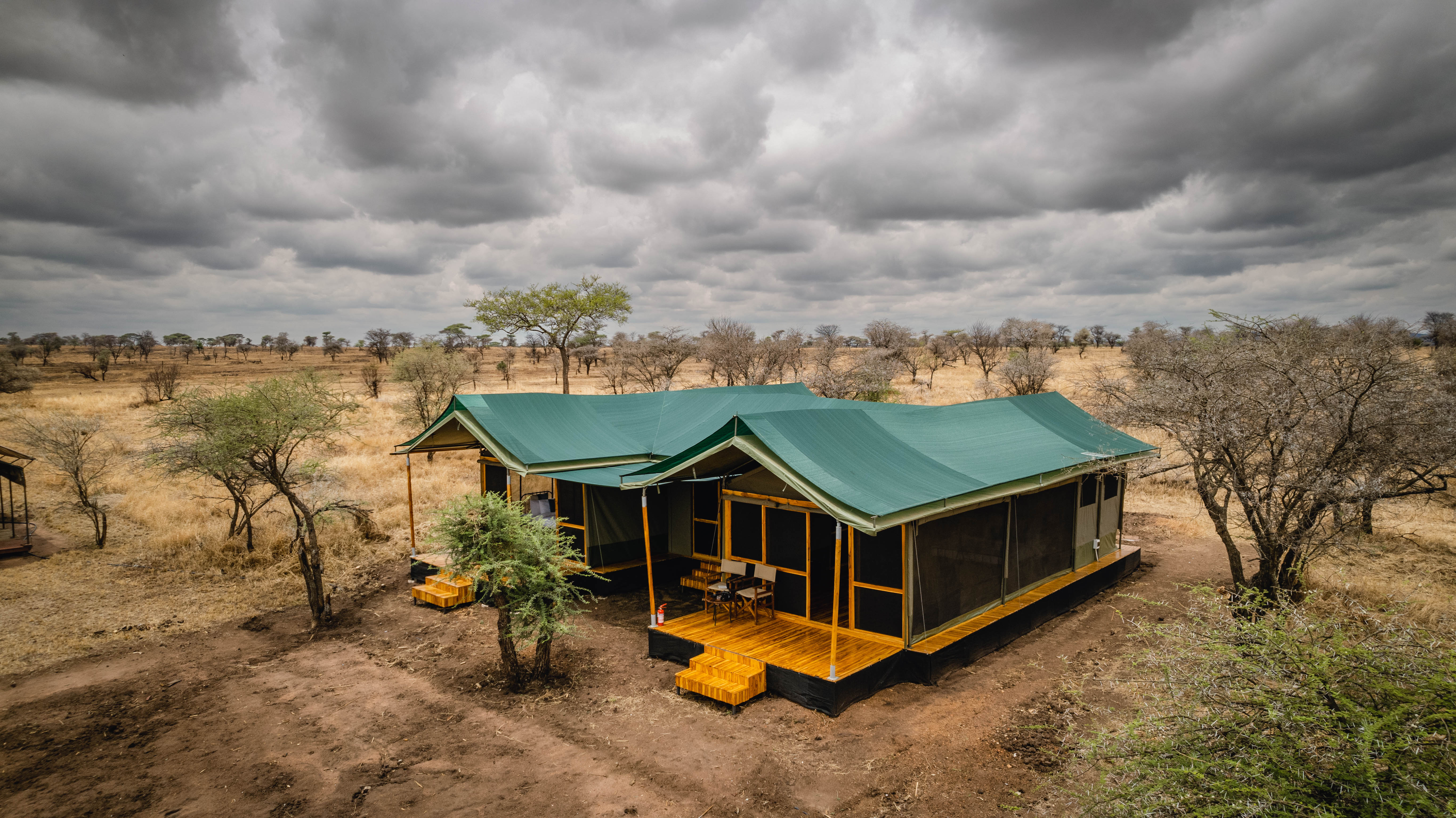
For travelers visiting during the calving season, Serengeti Classic View Migration Camp – Ndutu is a strong choice. Ndutu is one of the most important areas in the migration cycle, especially when the wildebeest gather to give birth. Staying in this area puts you close to wide open plains, fresh grazing, and plenty of wildlife movement.
What makes this camp valuable is the feeling of being near the heart of the season. Early mornings here can be full of life, with herds nearby and predators often not far behind. It is a thoughtful choice for photographers, wildlife lovers and travelers who want meaningful time in the southern Serengeti.
IV. Nyota Luxury Camp & Lodges
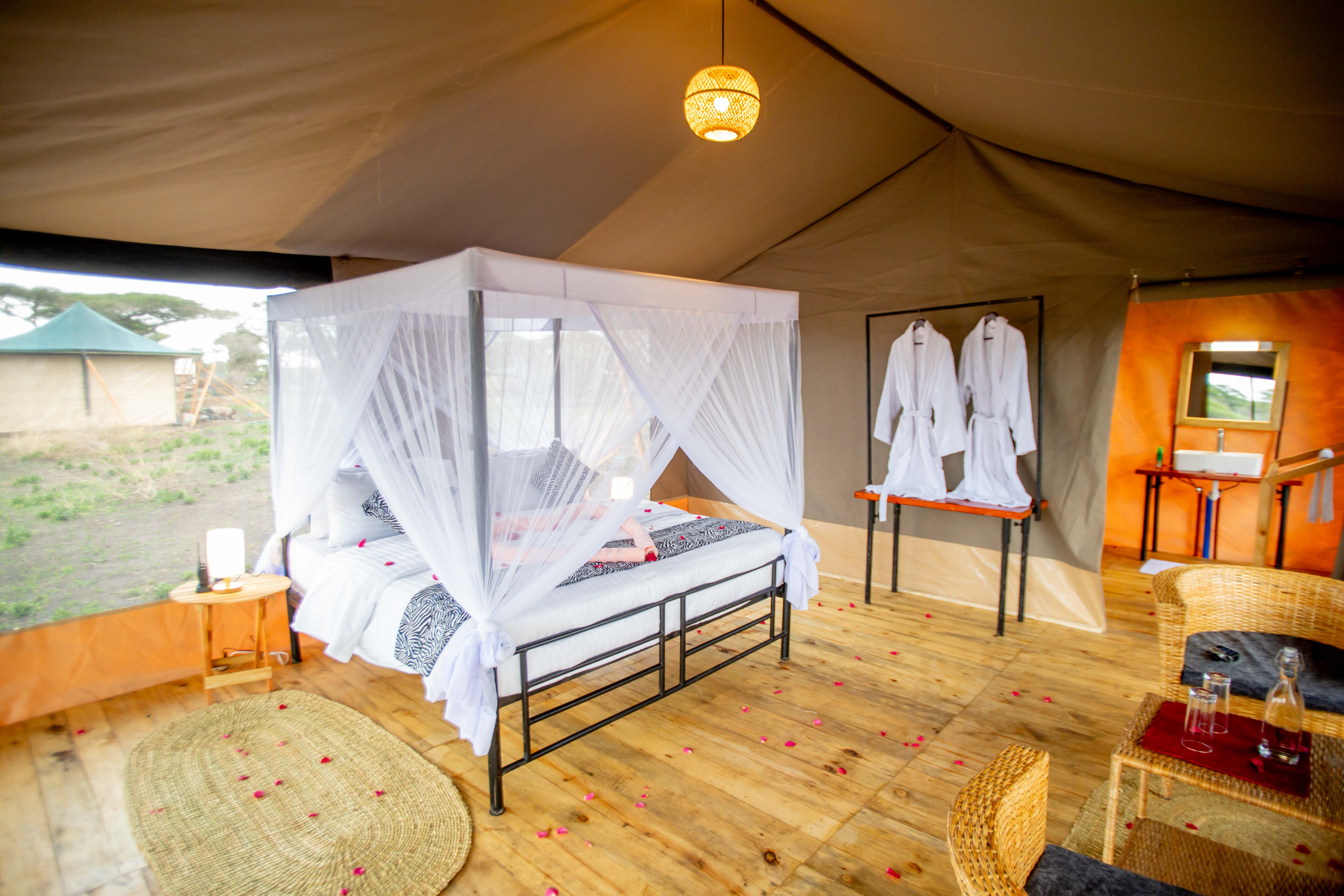
Nyota Luxury Camp & Lodges is ideal for travelers who want a higher level of comfort while still being part of the Serengeti experience. It offers a more refined setting, making it a good choice for couples, honeymooners, or anyone celebrating a special trip.
After a full day out in the field, returning to a space that feels calm and well prepared adds a different layer to the safari. It allows guests to rest properly, enjoy good meals, and recharge for the next day’s drives. At the same time, the camp keeps you within reach of important wildlife areas, so you are not trading location for comfort.
V. Kontiki Kati Kati Camp
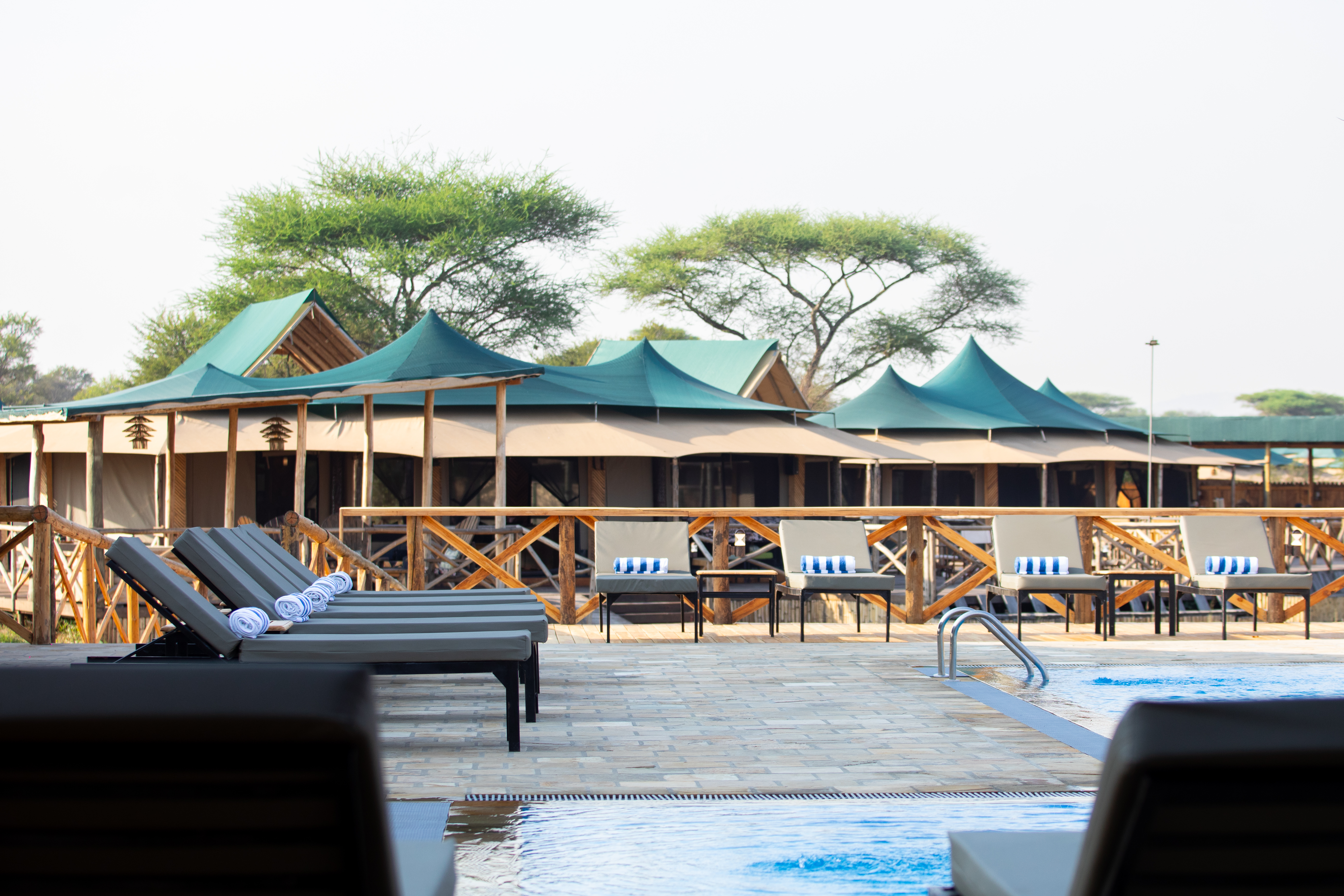
Kontiki Camps are a strong choice for travelers looking for a more authentic bush feel. These camps often appeal to guests who want the safari to feel simple, close to nature and focused on the experience rather than excess. That makes them a very good fit for migration travelers who care more about being in the right place than having too many extras.
For many visitors, this kind of stay creates a deeper connection to the Serengeti. You are not hidden away from the landscape; you are part of it. Kontiki Camps can work well for adventurous travelers, safari repeat visitors, and anyone who wants a stay that feels grounded and genuine. It is the kind of place where the sounds of the bush become part of your day and night, and where the migration feels less like a tour and more like a living story unfolding around you.
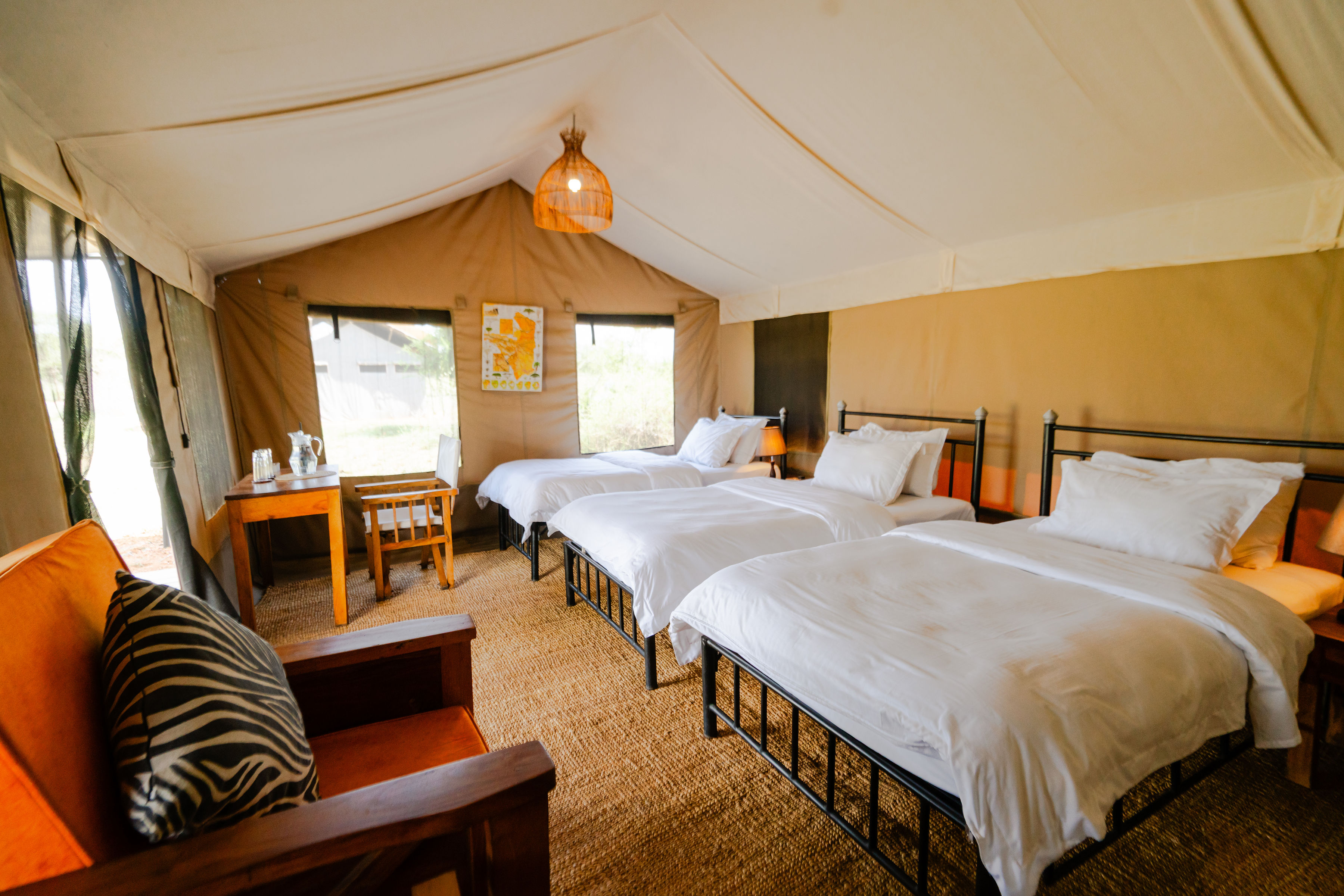
VI. Tukaone Serengeti Camps
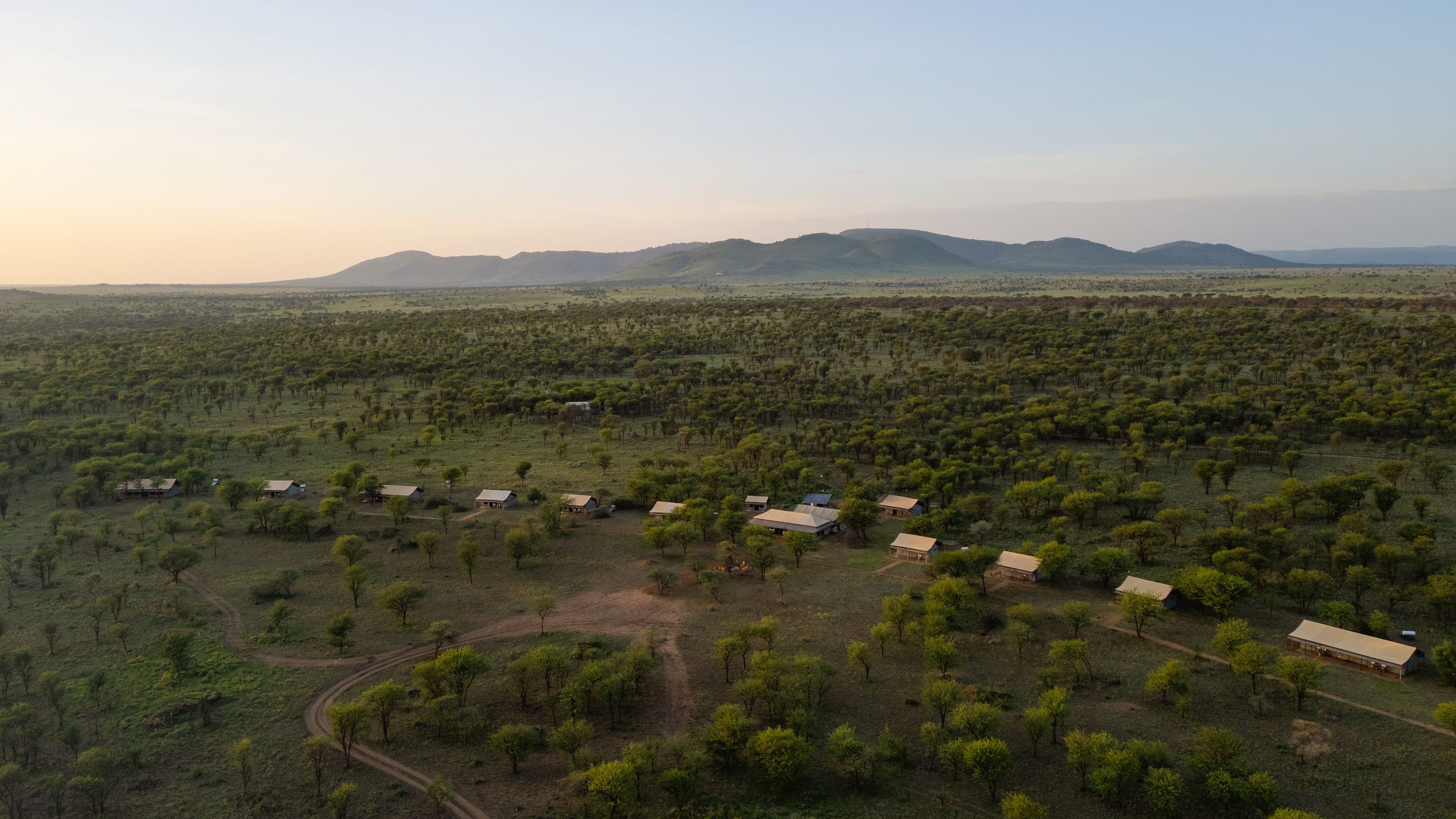
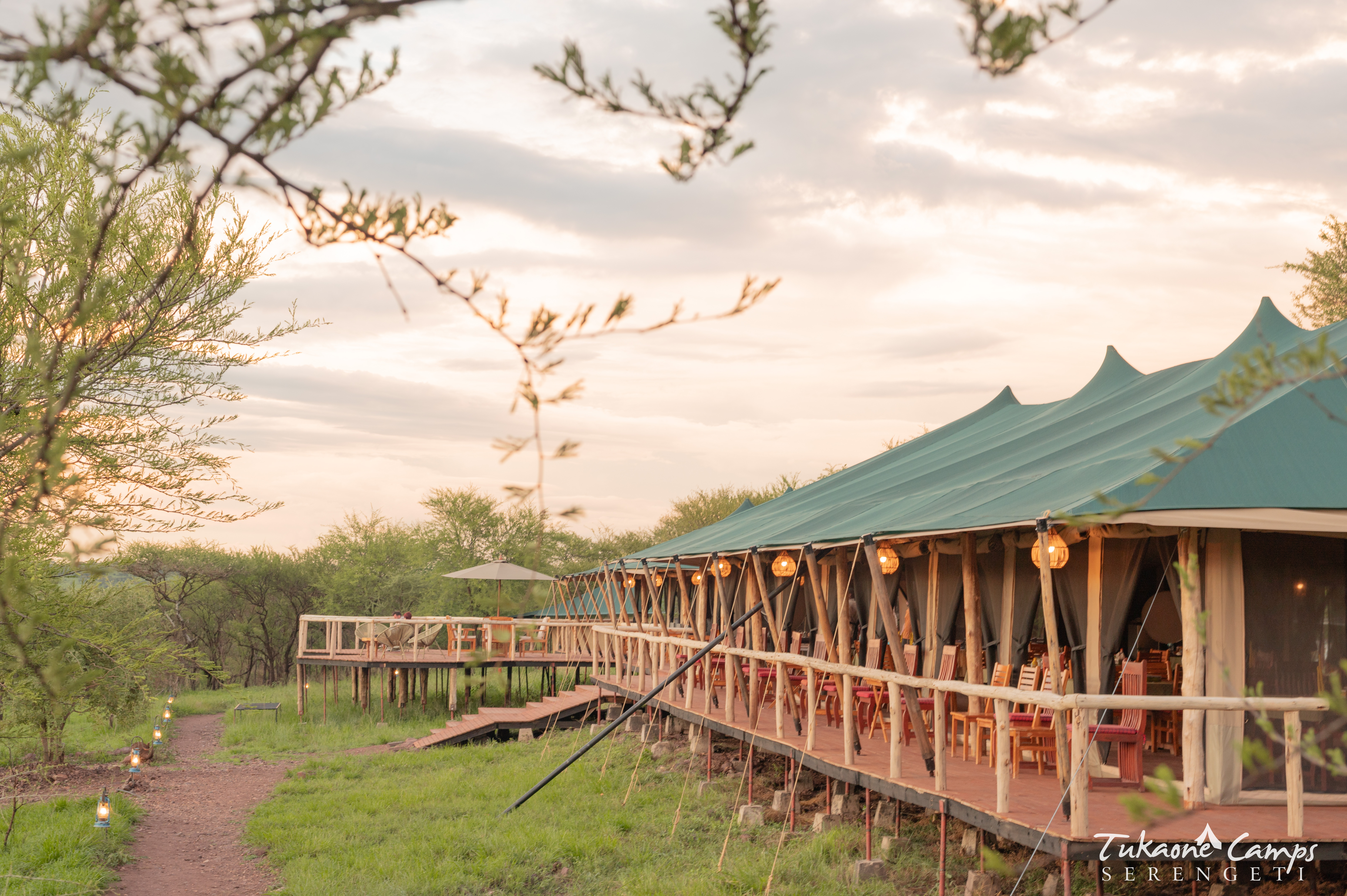
Tukaone Camps offer an exclusive gateway to the heart of the Serengeti, with a style that blends comfort and a more natural safari feel. The group describes its camps as a balance of modern comfort and authentic wilderness experiences, which makes them appealing to travelers who want the safari atmosphere without losing ease and comfort.
Their Serengeti properties are based in the central Serengeti, including camps set near the Hembe Hills, the Turner Area, and other prime wildlife zones. That central location gives guests access to resident animals as well as migration movement depending on the season. In practical terms, this makes Tukaone a strong choice for travelers who want a camp that is easy to work with while still keeping them close to the action.
Plan Your Migration Safari with Elevated Tanzania Safaris
If you’re thinking about experiencing the Great Migration, then having the right team makes all the difference. From choosing the best time to travel, to positioning you in the right place at the right moment. Expert planning shapes your entire safari.
Elevated Tanzania Safaris offers tailored safari experiences designed around the movement of the migration not just fixed itineraries. Whether you want to witness calving season, follow the herds or combine multiple parks, your journey can be built around what matters most to you.
Start Planning your Safari today and Experience the Migration as a story, not just a Sight.