
Wildlife You Can Find
Tanzania’s wildlife is woven into everyday’s movement across places like Serengeti National Park, Tarangire National Park and the enclosed ecosystem of the Ngorongoro Crater. As you drive through these areas, you begin to notice patterns where animals gather up, how they move and how different species exist alongside each other without chaos.
There’s a moment on safari when it clicks and you’re not searching anymore. You’re simply observing. The landscape begins to feel alive in a steady and predictable way, because your presence is in the wildlife environment you’ve stepped into.
You Come across a group of elephants crossing the road without urgency, lions resting just meters away, completely undisturbed by your presence. Zebras and wildebeest pass through in numbers that stretch beyond what you can count, not as a spectacle arranged for visitors but as part of their daily routine. You question, why are they here, why now and why together? Even silence begins to carry meaning.
You read and understand that, the Ecosystem from these wildlife scenarios, defines the nature and at its survival within the grace of the specified seasons.
This guide is built around animals you are almost guaranteed to see, not because they are rare, but because they have made these ecosystems their home in large numbers. For a traveller, this means less pressure and more time to simply enjoy the experience.
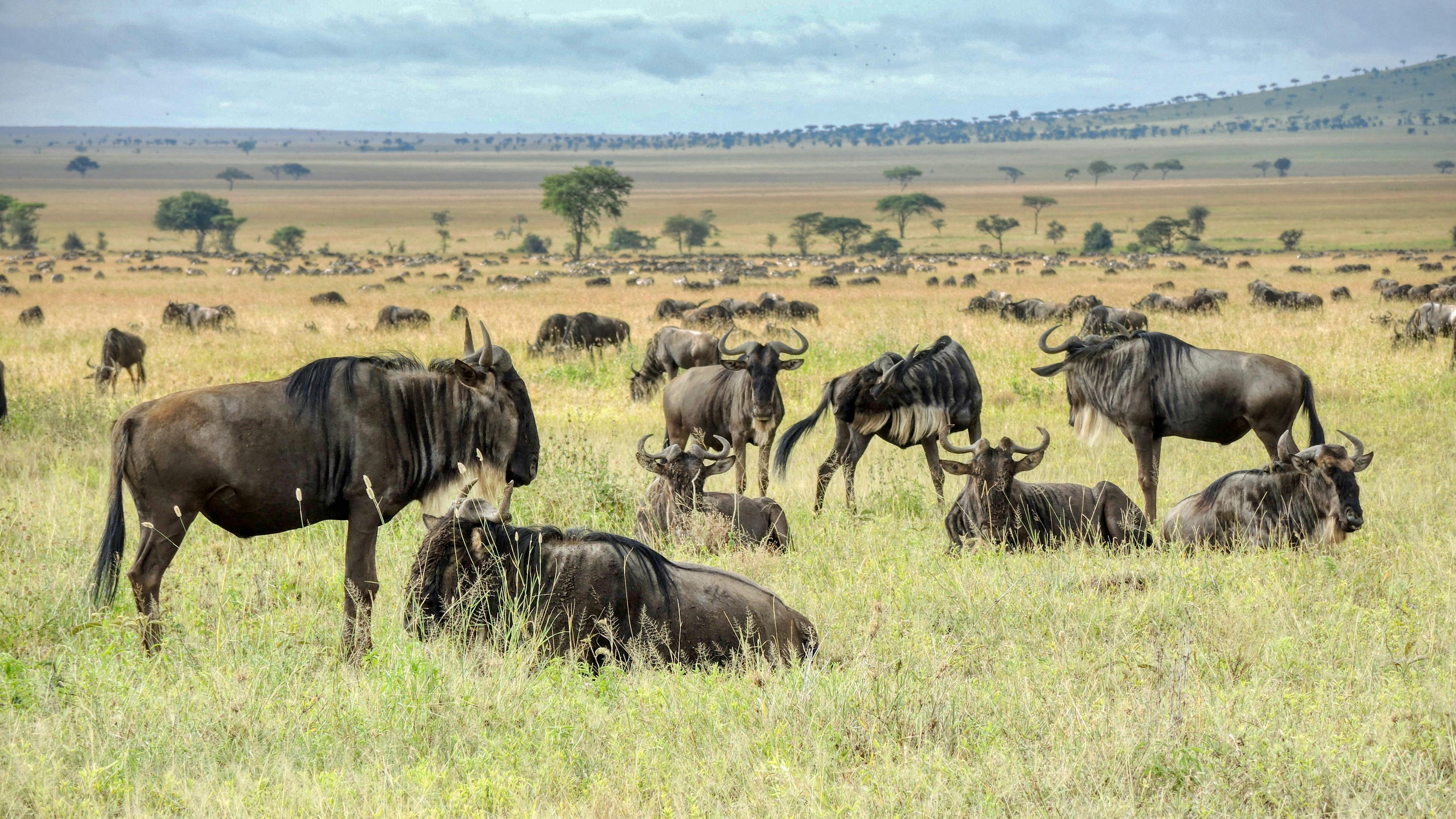
1. Wildebeest: Always Moving, Always Present
If you’re in the Serengeti National Park, you’re rarely far from wildebeest. Even outside the peak months of the Great Migration, smaller resident groups stay scattered across the plains.
They are not elegant animals, and that’s part of their charm. You’ll often see them standing still, staring into space or suddenly breaking into a run for no obvious reason. During migration periods, they gather in such large numbers that they dominate the landscape stretching far beyond what your eyes can comfortably take in.
2. Zebra: The Constant Companions
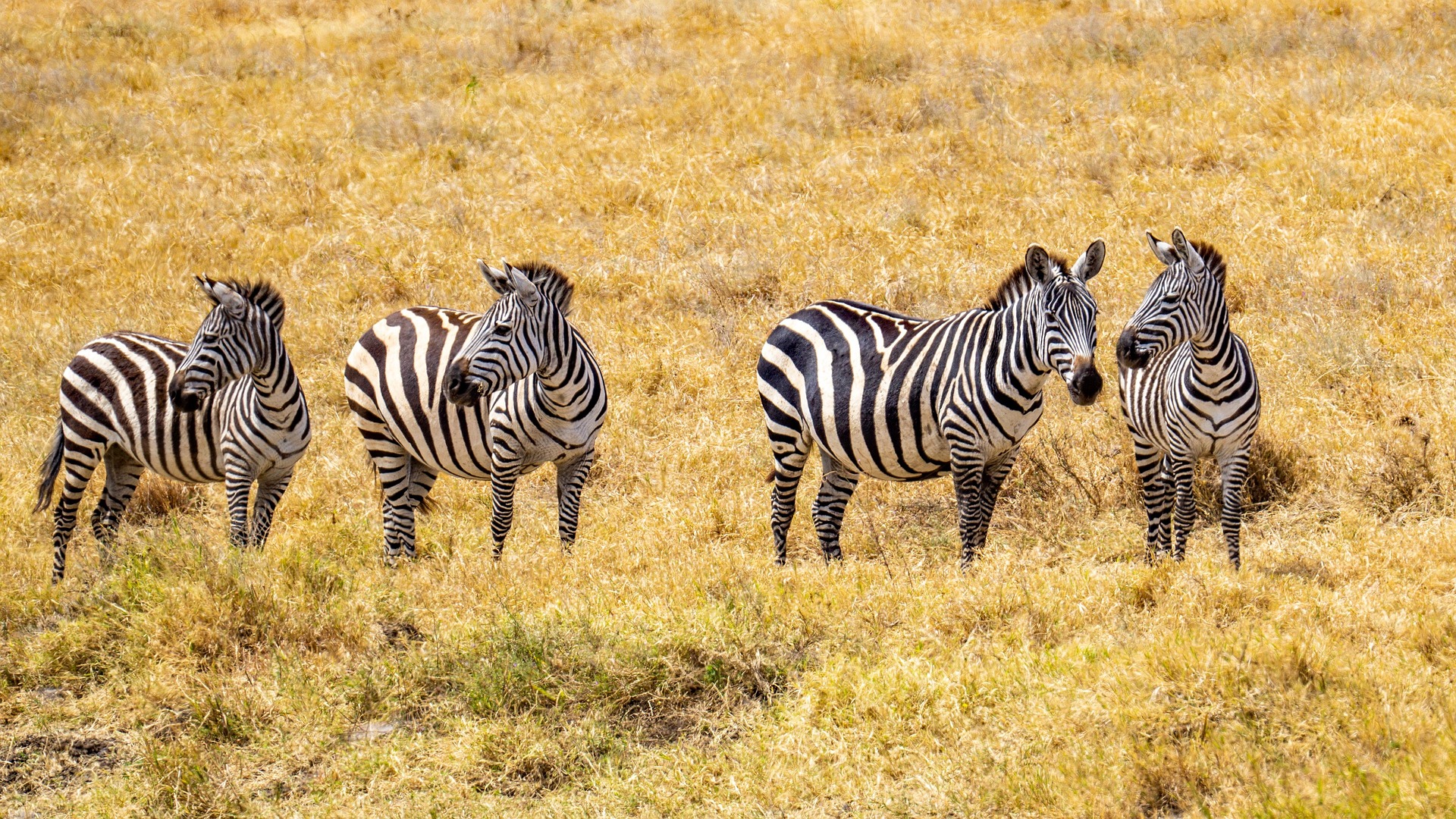
Zebras are rarely alone. They move alongside wildebeest, forming mixed herds that make wildlife viewing easier. Where you see zebra, there’s usually more happening nearby.
Their striped patterns are not just for show. On a practical level, those stripes help confuse predators when the herd is moving together. On a viewing level, they stand out clearly even from a distance, making them one of the easiest animals to spot on a game drive.
You’ll often find them grazing calmly near roads, completely unbothered by safari vehicles.
3. Giraffes: Tall and Unmissable
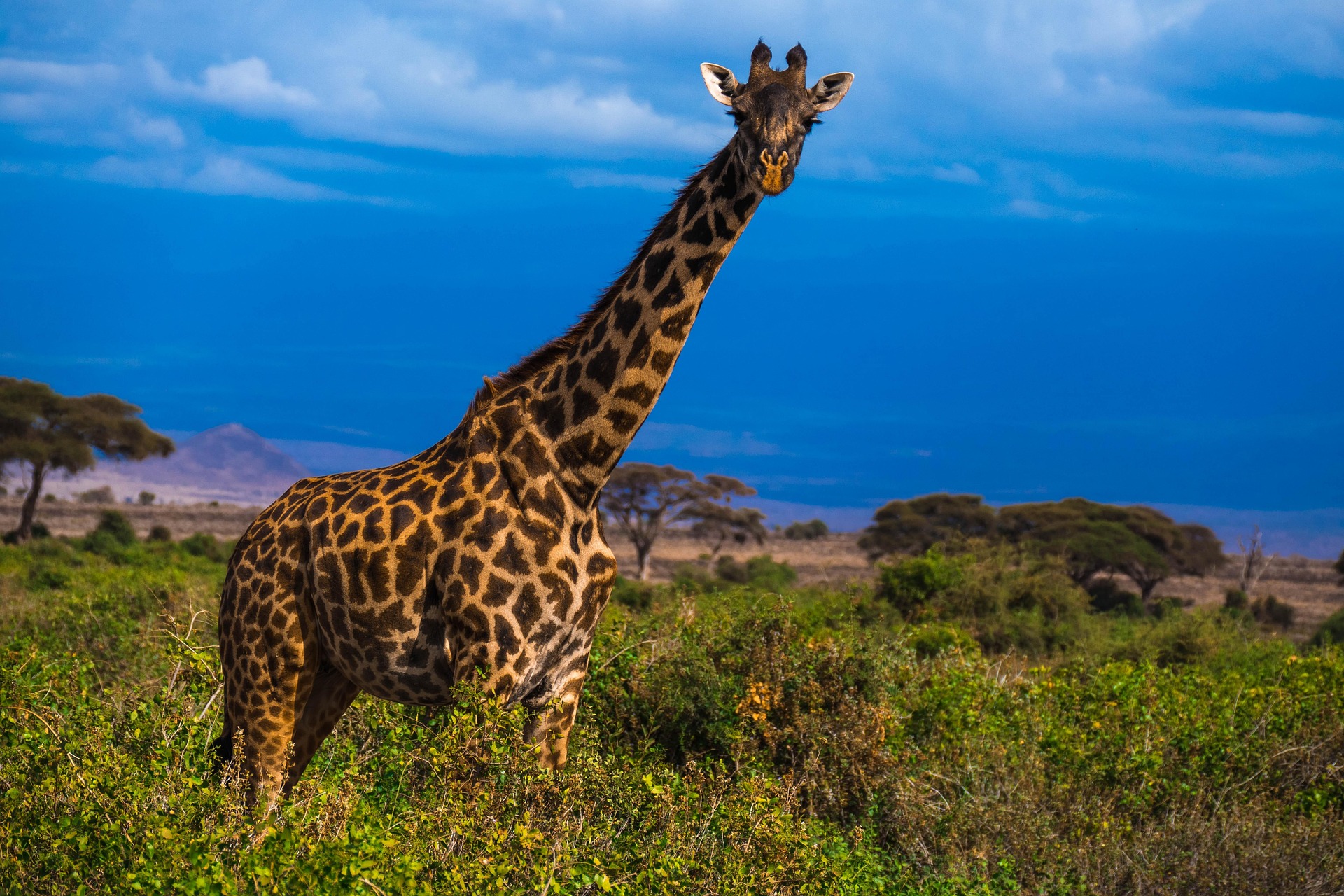
There’s no need to search for giraffes. Their height alone gives them away long before you get close.
In areas with acacia trees, especially around the Serengeti and the Ngorongoro highlands, they are a common sight. You’ll see them walking slowly, feeding or just standing still as if posing for photos.
One of the most interesting things to watch is how they move an unusual, almost slow-motion rhythm that feels very different from other animals.
4. Elephants: Quiet but Impossible to Miss
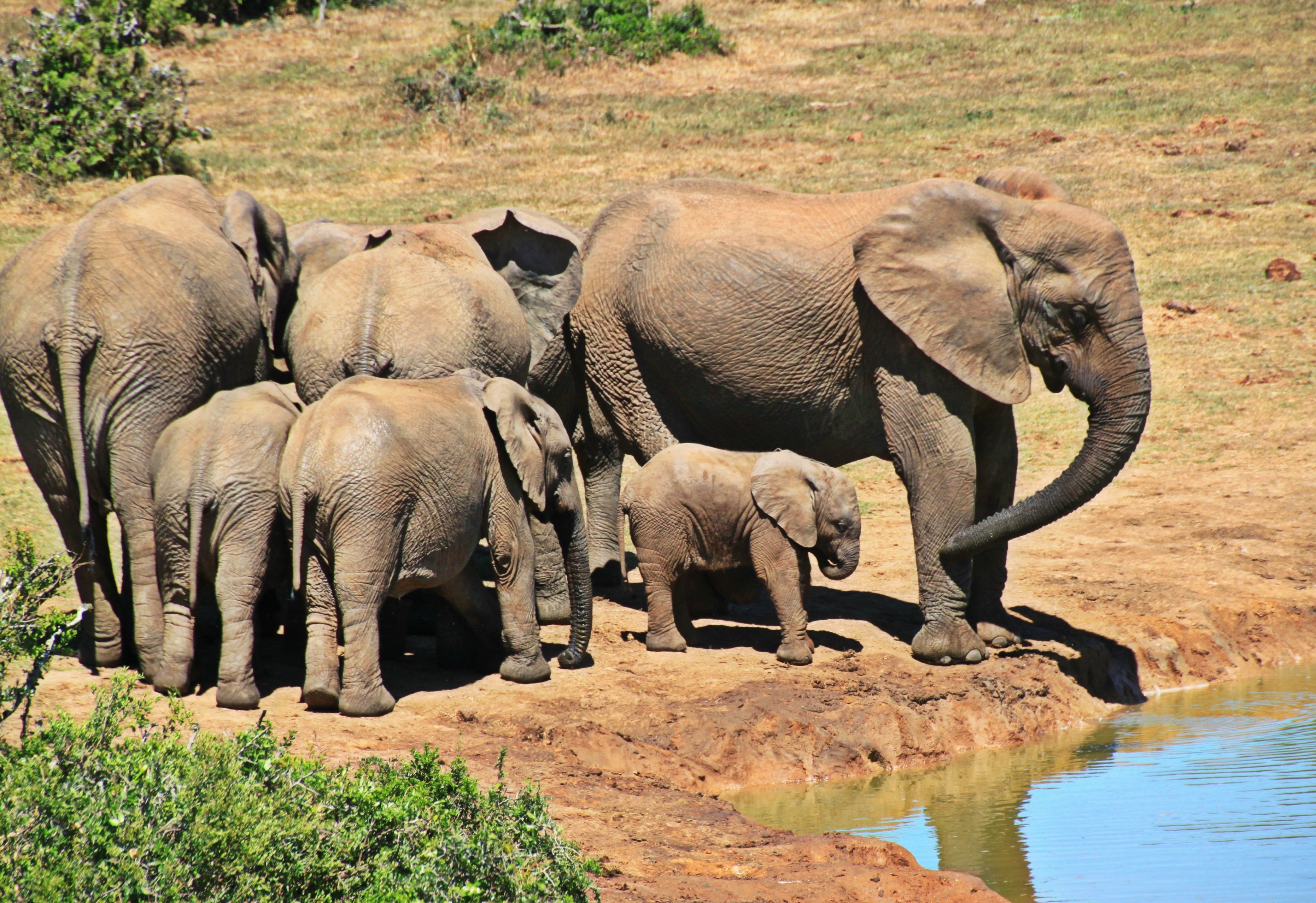
Elephants don’t hide, but they also don’t rush. They move with purpose, often in family groups led by an older female.
In the Tarangire National Park, sightings are especially consistent. During the dry season, elephants gather near water sources, making them even easier to find.
Spend a few minutes watching them and you’ll notice the details, the way they communicate through low sounds, how calves stay close to adults and how protective the group becomes if they sense anything unusual.
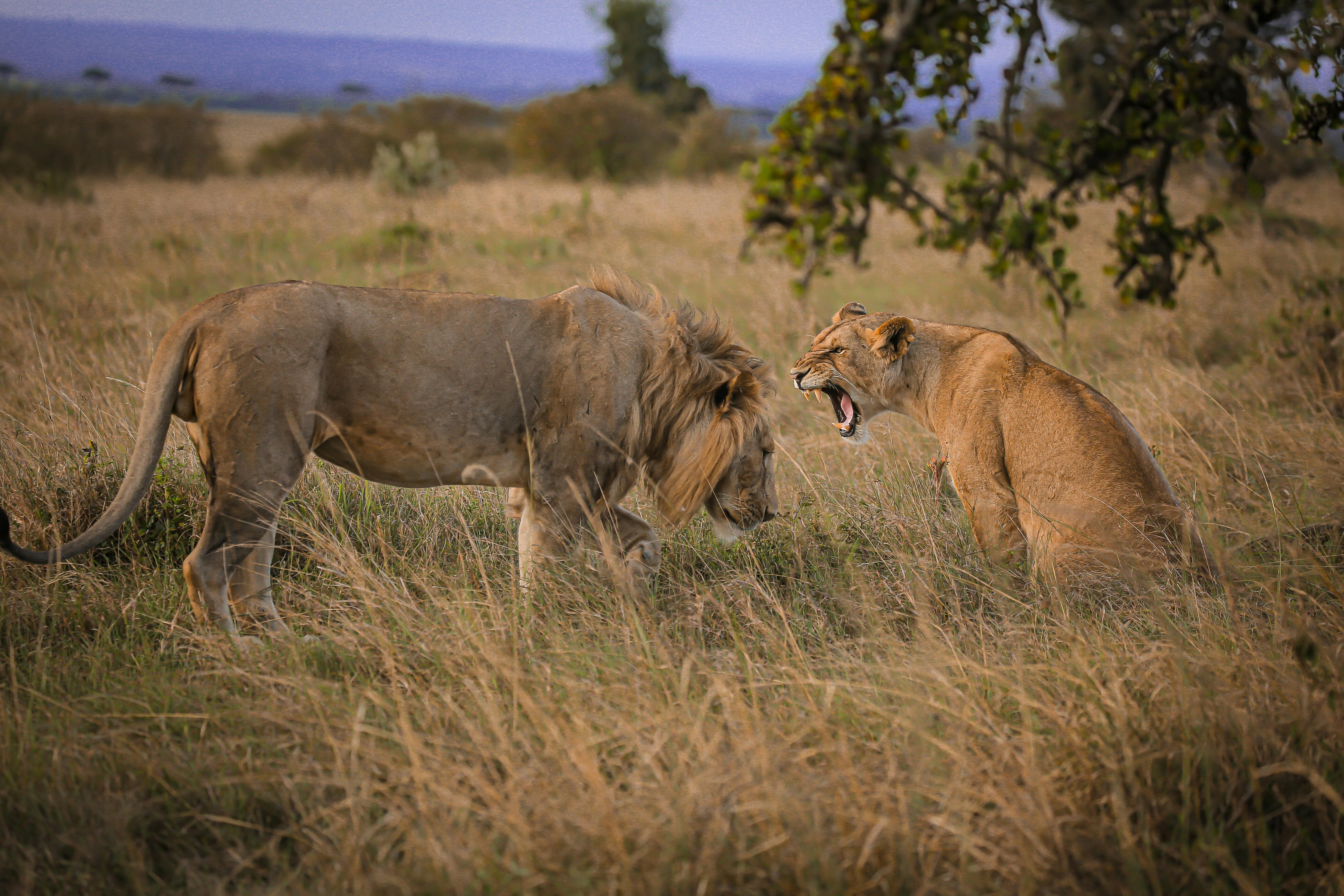
5. Lions: Not as Rare as You Think
Many first-time visitors think lions are hard to find. In northern Tanzania, that’s not the case.
In the Serengeti and Ngorongoro Crater, lions are used to vehicles. They rest for long hours during the day, often under trees or even in the middle of open ground. It’s not unusual to find them sleeping just a few metres from the road.
The key is timing and patience. Early mornings and late afternoons bring more activity stretching, walking or occasionally hunting.
6. Buffalo: The Quiet Powerhouses
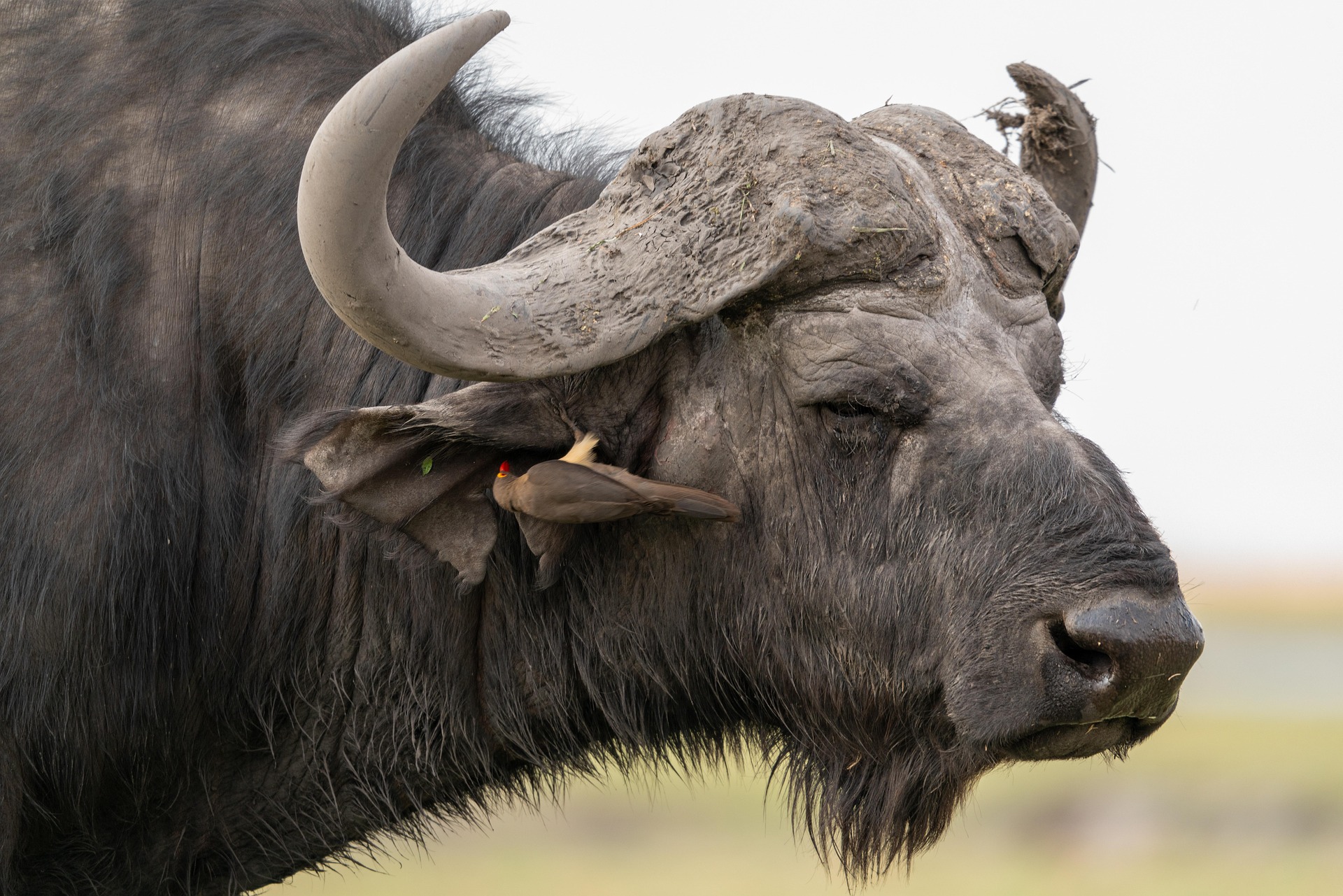
Buffalo don’t always get the attention they deserve, but they are one of the most reliable sightings on safari.
They move in large herds and are often found near water. In the Ngorongoro Crater, it’s common to see them grazing in open areas, sometimes with birds perched on their backs.
Despite their calm appearance, they are unpredictable and command respect. This contrast makes them interesting to observe.
7. Gazelles and Antelope: Everywhere You Look
Thomson's Gazelle & Grant's Gazelle.
These smaller animals are often overlooked, and they are everywhere.
They form the foundation of the ecosystem, supporting predators like lions and cheetahs. You’ll see them grazing, running or suddenly freezing in place when they sense danger.
Once you start paying attention to them, you realise how much of the safari experience revolves around their movements.
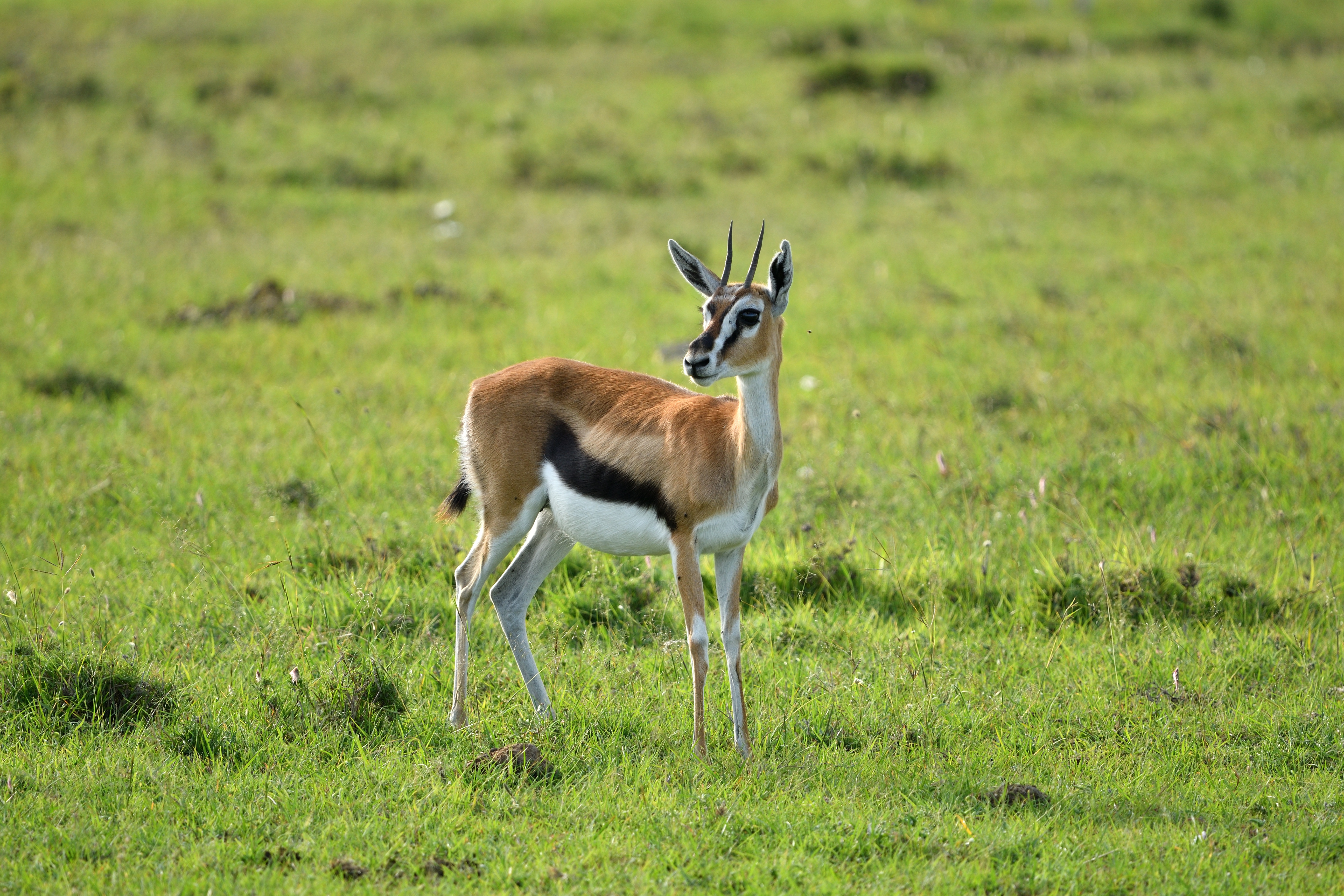
A Thomson's Gazelle
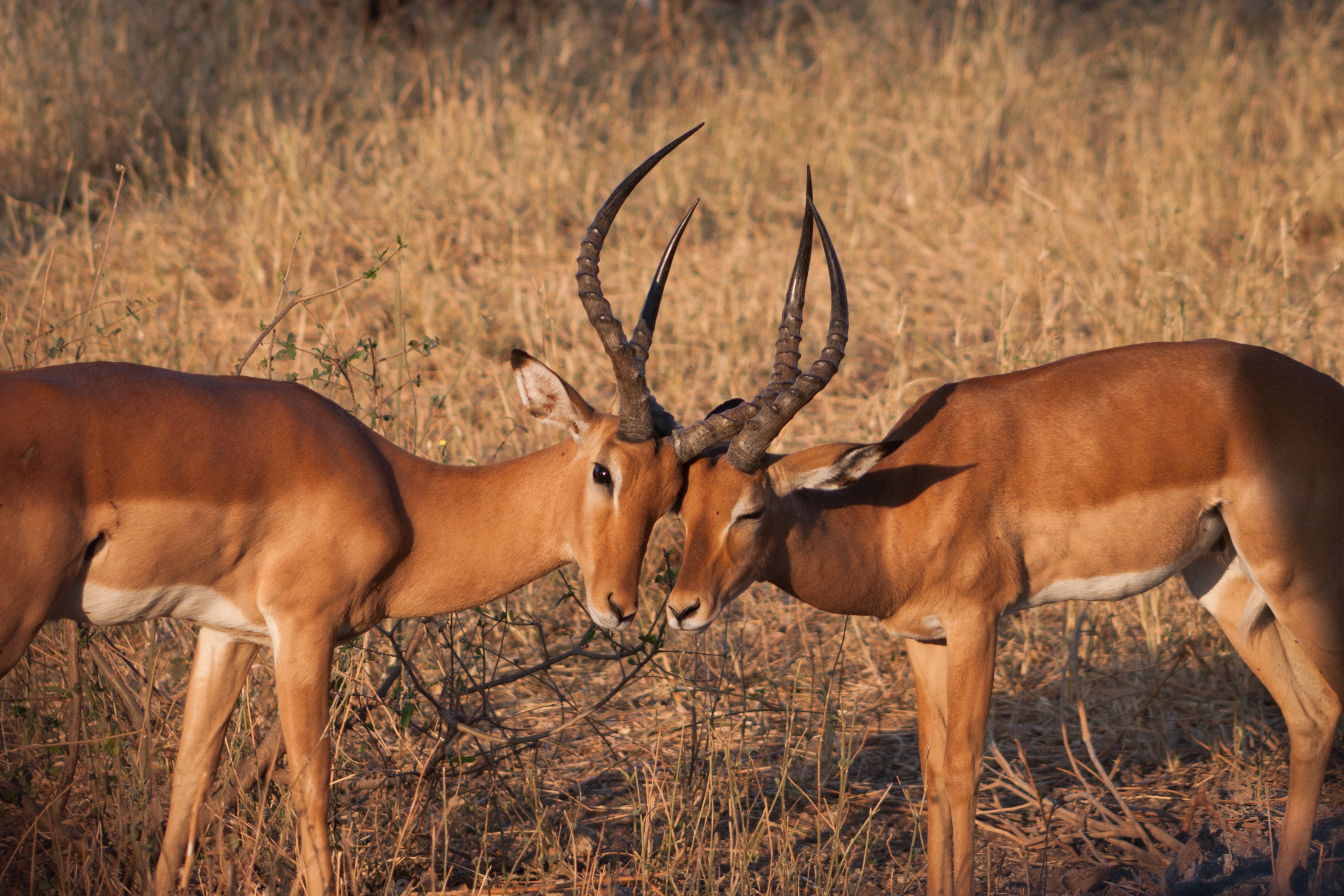
Impalas
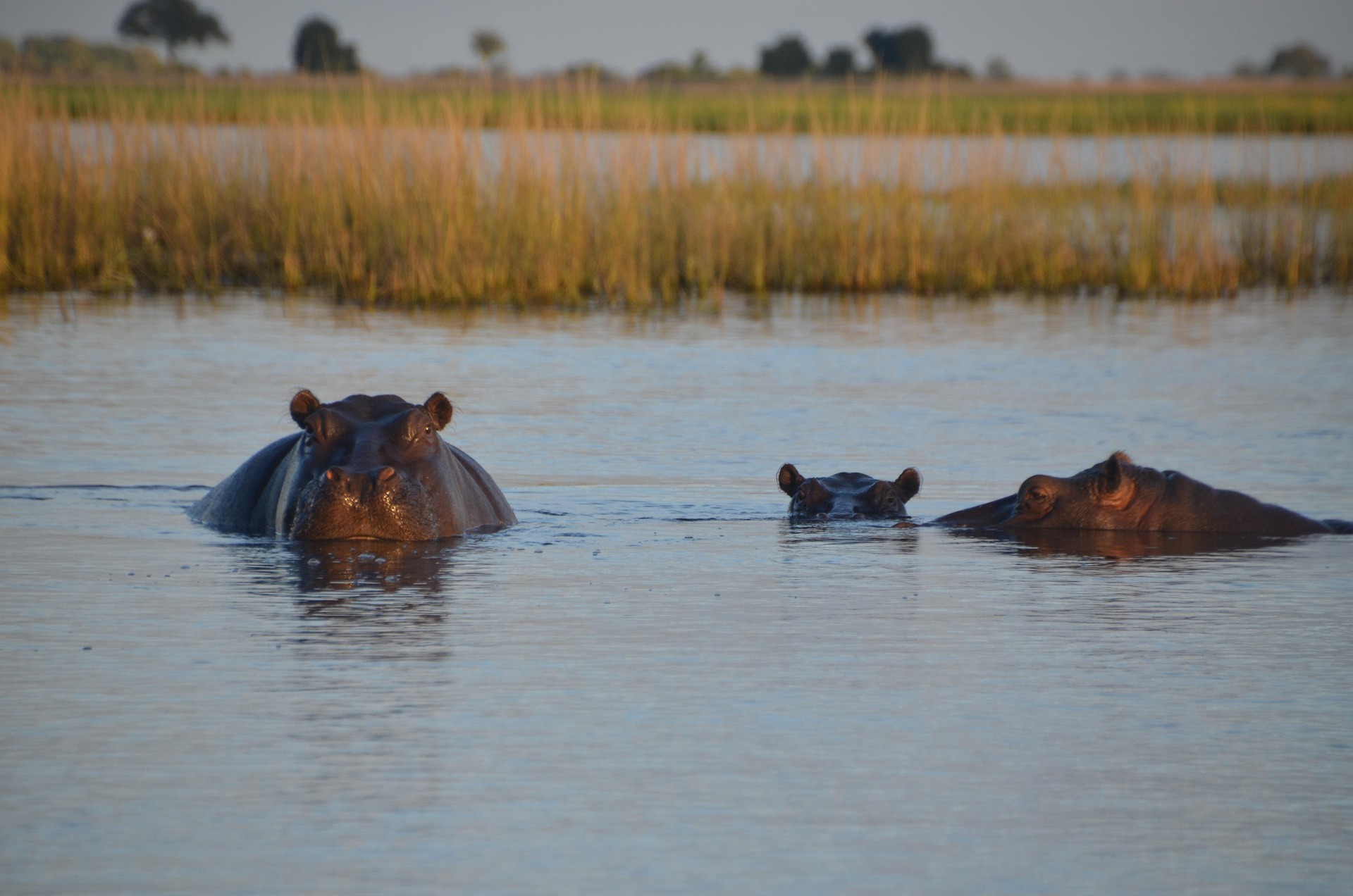
8. Hippos: Easy to Find, Hard to Forget
Hippos spend most of their day in water, which makes them surprisingly easy to locate. Visit a river or hippo pool, and you’ll almost certainly find them.
At first, you may only notice ears and eyes above the surface. But stay a little longer and you’ll hear the sounds grunts, splashes and sudden bursts of movement.
In the Serengeti, Ngorongoro, Tarangire, Manyara and other parks; hippo pools are often a stop during game drives, giving guests time to observe them properly.
For someone visiting Tanzania, this is what makes the experience comfortable and rewarding. Even on a short trip, you leave with meaningful encounters not just quick glimpses.
Book your Elevated Tanzania Safari and experience the difference.